By Roger Wakefield, Licensed Master Plumber · Published October 19, 2026
Quick answer: How to price leak detection? Charge for the finding as its own line on the invoice, separate from the repair, and build that price from what the finding really costs you: the technician’s time, the training and the equipment. A LeakPro® Complete Kit is $2,995, so every leak your team finds should help pay for the tool that found it.
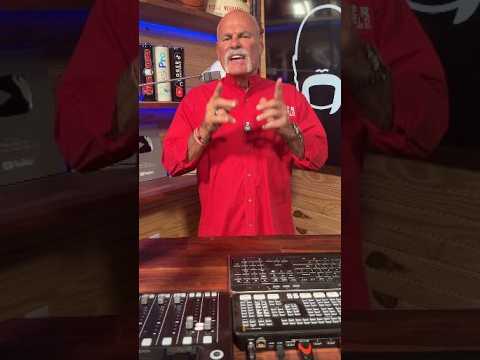
In this short video, Roger Wakefield explains why a company that can find what nobody else can find should stop charging like it is a service call. The finding is the skill, the finding is the value, and he says to charge for it.
What does “charge for the finding” mean?
Every leak job is really two jobs. The first job is the finding, which plumbers also call the locate: tracking down a hidden leak under the slab, in a wall or in the yard, and marking the exact spot. The second job is the repair.
The slab is the concrete floor a house sits on. When a pipe leaks under it, nobody can see the water, and that is exactly when a homeowner needs somebody who can find it. Charging for the finding means the locate goes on the invoice as its own line, with its own price.
Roger puts it plainly: “If you can find what nobody else can find, stop charging like it’s a service call. The finding is the skill. The finding is the value. Charge for it.”
He also points out that the repair is usually small, and finding the leak is the hard part. That is why leak detection is a specialty. If you are still setting it up, start with how to add leak detection services to your plumbing business.
Why shouldn’t you price leak detection like a service call?
A service call price is built for routine work, the kind almost any truck in town can handle. Finding a hidden leak is not routine. Roger’s line on it: “Nobody pays extra for the guy who does a little bit of everything. They pay extra for the guy who found it after three other companies couldn’t.”
He teaches that every trade has one skill that turns a service call into a specialist call, and it’s usually the diagnosis. Diagnosis means figuring out exactly what is wrong and exactly where. In Roger’s words: “Anybody can swap a part. Very few can tell you which part, why, and prove it.”
And if you don’t know what that skill is in your company, Roger warns that you’re competing on price with every truck in town. Leak detection done right is the way out of that race.
What is the finding worth to the homeowner?
Price follows value, so start with what the customer gets. The U.S. Environmental Protection Agency (EPA) says household leaks can waste nearly 1 trillion gallons of water a year nationwide. Here is more of what the EPA’s WaterSense Fix a Leak Week page reports:
- The average household’s leaks can waste more than 9,300 gallons of water every year.
- Nine percent of homes have leaks that waste 50 gallons or more every day.
- Fixing easily corrected leaks can save homeowners about 10 percent on their water bills.
Roger’s take on that EPA number: most of those homeowners have no idea. Somebody has to find it, and he says that somebody should be a plumber.
Then there is the damage. The Insurance Information Institute (Triple-I) reports that the average homeowners insurance claim paid for water damage and freezing was $15,400 for 2019 through 2023. Every leak found early is a leak that has less time to do that kind of damage.
What costs should your leak detection price cover?
Before you put a price on the finding, know what one leak detection call costs your company. A price that only covers the technician’s hourly pay loses money, because pay is only one of the costs on that call.
- The equipment. LeakPro’s American-made tools are $1,295 for the Sidekick, $1,395 for the Probe, and $2,995 for the Complete Kit with both. With 0% financing through Affirm, the Complete Kit runs about $125 a month.
- The training. A technician learning leak detection is off the schedule while they learn, and that time is part of what the finding is worth.
- The technician’s time. The U.S. Bureau of Labor Statistics (BLS) puts the median wage for plumbers, pipefitters and steamfitters at $30.67 an hour in May 2025. Median means half earned more than that and half earned less. That is the wage alone, before payroll taxes, insurance and the truck.
- Overhead. Overhead is everything it costs to keep the doors open that is not tied to one job: the office, the phones, insurance, fuel and the trucks. Every call carries a share of it.
- Time you can’t see on the floor. Driving to the job, setting up, and walking the customer through what you found all take time on a leak call.
For the full picture of what plumbers earn, read how much do plumbers make on rogerwakefield.com, then come back and price the skill, not just the hours.
How do you set your price for the finding?
Use these steps to build a leak detection price you can explain to any customer and defend on any invoice.
- Add up your cost for one call. Take the technician’s hours on the job and on the road, add the equipment payment and a share of overhead, and write the total down.
- Price the finding as its own line. The customer is paying for a result: the leak located and marked. Set that price above your cost so it pays for the skill, not just the time.
- Tell the customer before you start. Explain that the finding is one charge and the repair is a separate charge, so nobody is surprised by the invoice.
- Photograph the water meter first. Roger’s rule for every leak job is to take a picture of the water meter before you touch anything.
- Find it, mark it and show the customer. As Roger says, the company with the equipment and the training finds it, marks it, and charges for the finding.
- Photograph the meter again when you’re done. The before and after photos go with the invoice.
- Quote the repair separately. The repair gets its own price on its own line, whether your company does it or not.
Should you charge for the finding if you also do the repair?
Yes. The finding and the repair are two different jobs, and each one goes on the invoice as its own line. When the finding gets folded into the repair, the hardest part of the job shows up on the bill as nothing at all.
A separate line also protects you. If the customer decides to wait on the repair, or hires somebody else to do it, the finding has still been done, and it still gets paid.
How do you prove the leak so the customer pays for the finding?
Proof turns a price into a fair price. Roger shares a free leak test straight from the EPA: turn off every faucet, read the water meter, wait two hours without using any water, then read it again. If the number moved, water is going somewhere. LeakPro’s water leak test shows the plumber’s version of the check, done with a pressure gauge on an outside faucet.
On every leak job, keep a record of:
- A photo of the water meter before you touch anything
- The spot where the leak was found, marked so the customer can see it
- A photo of the water meter when you are done
- The finding and the repair written as separate lines on the invoice
Roger’s rule is simple: meter photo in, meter photo out, every leak job. That one habit is your proof, your invoice and your defense.
How do you explain the price to the customer?
Keep it short and show your work. The customer is not paying for minutes on the floor. They are paying to know exactly where the water is going, so the repair happens in the right spot.
- Show the meter photo from the start of the job and the one from the end.
- Show the marked spot and explain which pipe is under it.
- Explain that the finding and the repair are two separate charges.
- Remind them that a leak left alone keeps running every day nobody finds it.
Why does training make the finding worth more?
Acoustic leak detection tools work on sound. Water escaping a pressurized pipe makes a hiss, and acoustic tools let a plumber hear that hiss through concrete and soil. The tool does not find the leak by itself. The person listening does, and that skill is what the customer pays for.
LeakPro’s leak detection training is 2 days of hands-on work in Wylie, Texas, on a purpose-built training slab with 12 real, live leaks. Lead trainer Henry Wakefield covers slab leak detection, line locating and sewer leak isolation, which means testing one section of a sewer line at a time to find the section that leaks. See the full method in the leak detection process.
Roger’s warning for plumbing company owners: every leak call you take right now, you’re either guessing or passing. Three holes in the drywall and still no leak is not bad luck. It’s guessing. Finding it is a specialty, so price it like one.
Frequently asked questions about pricing leak detection
Here are short answers to the questions plumbing company owners ask about pricing leak detection.
Should leak detection be a separate charge from the repair?
Yes. Charge for the finding as its own line on the invoice, and quote the repair as a separate line. The finding is the skill, so it gets its own price.
How much does leak detection equipment cost?
The LeakPro Sidekick is $1,295, the Probe is $1,395, and the Complete Kit with both tools is $2,995. Compare them in the best leak detection equipment for plumbers guide.
Can you finance leak detection equipment?
Yes. LeakPro offers 0% financing through Affirm, and the Complete Kit runs about $125 a month, so the equipment can go to work on jobs while you pay it off.
How long does it take to learn leak detection?
LeakPro’s certification is 2 days of hands-on training, typically 6 to 8 hours a day. Most plumbers locate their first live leak on the training slab within the first morning.
How do you prove a leak before you charge for the finding?
Take a picture of the water meter before you touch anything and another when you’re done. If the meter keeps moving with every faucet off, read how to find water leaks when the meter hasn’t stopped spinning.
Ready to charge for the finding?
Get the equipment and the training in one place. Shop LeakPro equipment, see the leak detection training, or call LeakPro at 1-888-853-2577 to talk it through.
Leave a Reply