By Roger Wakefield, Licensed Master Plumber · Published November 3, 2026
Quick answer: What is line locating for plumbers? Line locating means finding and marking exactly where a water or sewer line runs before you dig, cut or listen for a leak. Plumbers trace the pipe with locating equipment and mark its path, and before any digging they call 811 so the buried utility lines get marked too.
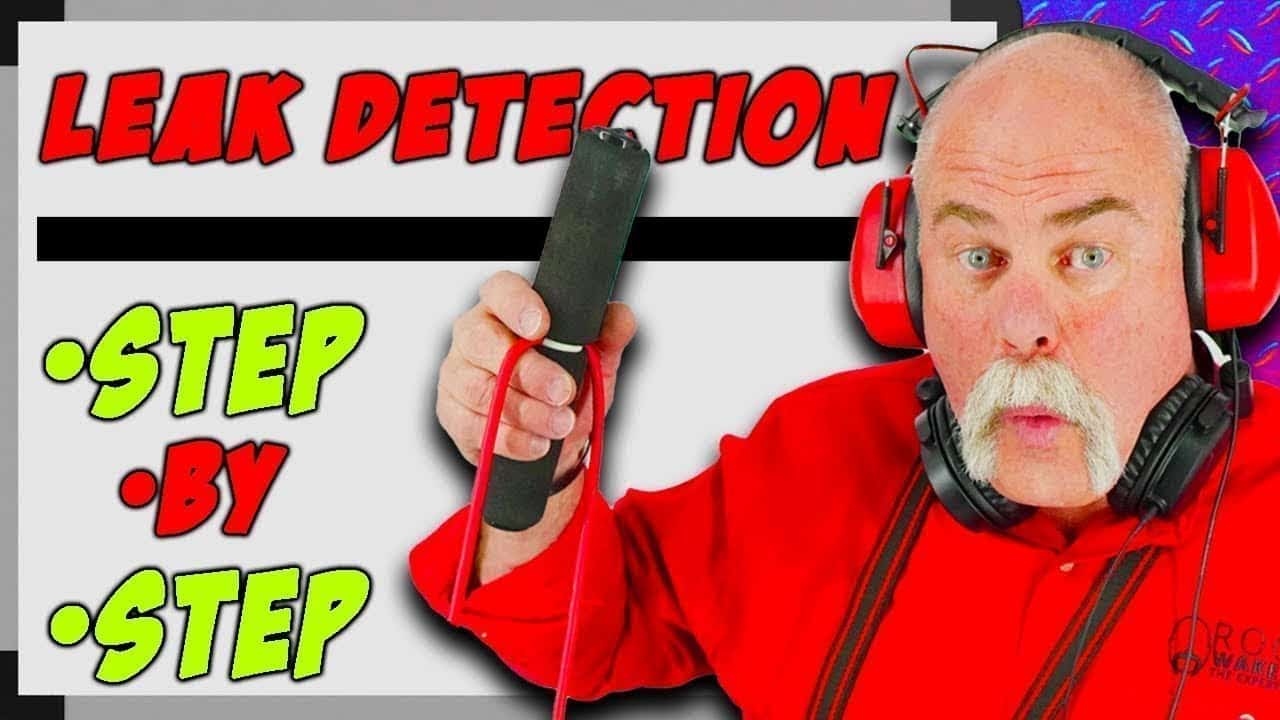
In this video, Roger Wakefield walks through leak detection step by step. Near the end he locates the lines under the slab with his location equipment, marks them with blue masking tape, and then listens right above the line. Read on for why line locating comes before the dig.
What is line locating?
It is the step that turns a leak somewhere between two points into a pipe that runs right here. In Roger’s video, once listening has narrowed the leak down to a section of line, he locates that line and marks where it runs before he does anything else.
Why should plumbers trace the pipe before they dig?
Because listening works best right on top of the pipe. Roger says in the video that he wants to locate the line right where it is so he can listen right above it. Listening from the wrong spot can send the dig to the wrong spot.
How do plumbers mark a water line?
Roger’s method from the video is simple:
- Hook the location equipment up to the copper line.
- Trace the line and mark where it runs.
- Put a piece of blue masking tape on the floor every few feet along the path, so you know right where the line is.
- Do the same for each line that could hold the leak.
- Listen along the taped path, right above the pipe.
Do you have to call 811 before digging for a water line?
In Texas, yes, for most digs. The Railroad Commission of Texas says anyone planning to dig or excavate 16 inches or deeper is required by Texas law to call 811, and it recommends calling before any project that involves digging, regardless of depth.
The commission also says homeowners, excavators and contractors are required by law to call 811 at least two days before digging, and that the call to 811 is free.
What happens when you call 811?
The U.S. Pipeline and Hazardous Materials Safety Administration (PHMSA) says dialing 811 reaches the one-call center wherever you are digging. The facility operators then visit the site and mark their lines with flags or paint, and PHMSA says there is no cost to you, even for the call.
Why does calling 811 matter on a plumbing job?
Because the plumbing is rarely the only thing buried in the yard. The Railroad Commission of Texas says Texas has nearly half a million miles of pipeline, and warns that there could be pipelines, water and sewer lines, electric cables and other utilities under a property.
PHMSA says underground facilities are damaged during excavation every year, in hundreds of thousands of incidents. Read the leak detection safety basics before any job that involves digging.
Does line locating replace leak listening?
No, it sets it up. Roger’s process isolates the system first, listens to narrow the leak down, locates the line, and then listens right above it to pinpoint the spot. LeakPro explains how listening equipment works in acoustic leak detection.
What gets in the way of line locating indoors?
The floor. Roger says in the video that hardwood, tile or carpet can cause problems. You may need to peel back the carpet, and with hardwood floors he says to get the customer’s insurance company involved.
What repair options come after the line is found?
Roger says to give the customer options: going through the floor, rerouting the line, or tunneling underneath. Knowing exactly where the line runs is what lets you lay out each of those options.
Why does finding the leak fast matter?
Because a leak keeps running until someone finds it. The U.S. Environmental Protection Agency (EPA) says on its Fix a Leak Week page that the average household’s leaks can account for more than 9,300 gallons of water wasted every year.
The EPA also says fixing easily corrected household water leaks can save homeowners about 10% on their water bills.
Frequently asked questions about line locating
These are the questions plumbers and homeowners ask most about locating a line before they dig.
How deep can you dig in Texas without calling 811?
The Railroad Commission of Texas says digging 16 inches or deeper requires a call to 811 under Texas law, and it recommends calling before any digging at all.
How far ahead do you have to call 811 in Texas?
At least two days before digging, according to the Railroad Commission of Texas.
Is calling 811 free?
Yes. PHMSA says there is no cost to you, even for the call, and the Railroad Commission of Texas says the call to 811 is free.
How do you mark a line inside a house?
In his video, Roger traces the line with location equipment and puts blue masking tape on the floor every few feet, so he knows right where the line runs.
Who is Roger Wakefield?
Roger Wakefield is a licensed Master Plumber who teaches plumbers leak detection on his YouTube channel.
Need help finding the leak once the line is marked?
Read how to find an underground water line leak in the yard or find a leak behind a wall, look into LeakPro leak detection training, or contact LeakPro at 1-888-853-2577 to talk it through.
Leave a Reply